Stop Buying Disposables: Why USB-C Rechargeable AA & AAA Batteries Are a Game Changer
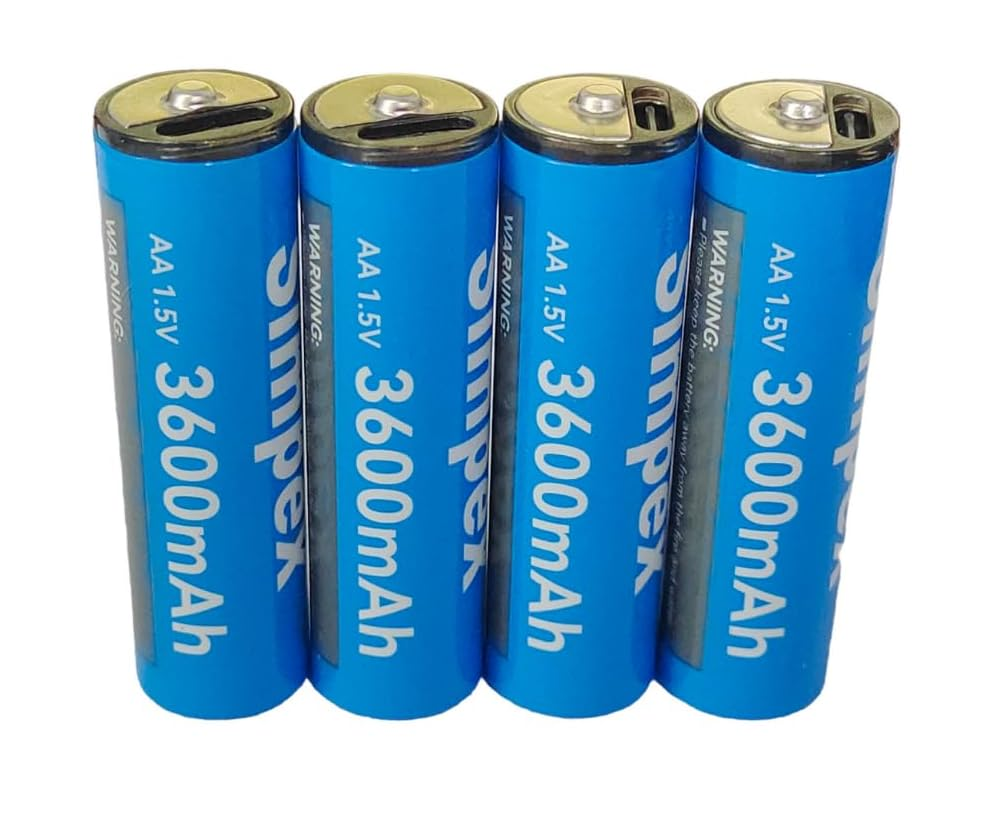
We’ve all been there. Your TV remote dies in the middle of a movie, or your gaming controller disconnects during a crucial match. You rummage through the “junk drawer,” hoping to find a loose AA battery, only to find three dead ones and a sticky 9-volt from 2005.

For decades, the solution was either buying expensive packs of single-use alkaline batteries or dealing with clunky “old school” rechargeable NiMH batteries that required a bulky wall charger.
Enter the modern solution: USB-C Rechargeable AA and AAA batteries.
These aren’t your grandfather’s rechargeables. They are lithium-ion powerhouses with a charging port built right into the battery itself. Here is everything you need to know about why you should probably make the switch—and the few times you shouldn’t.
How Do They Work?
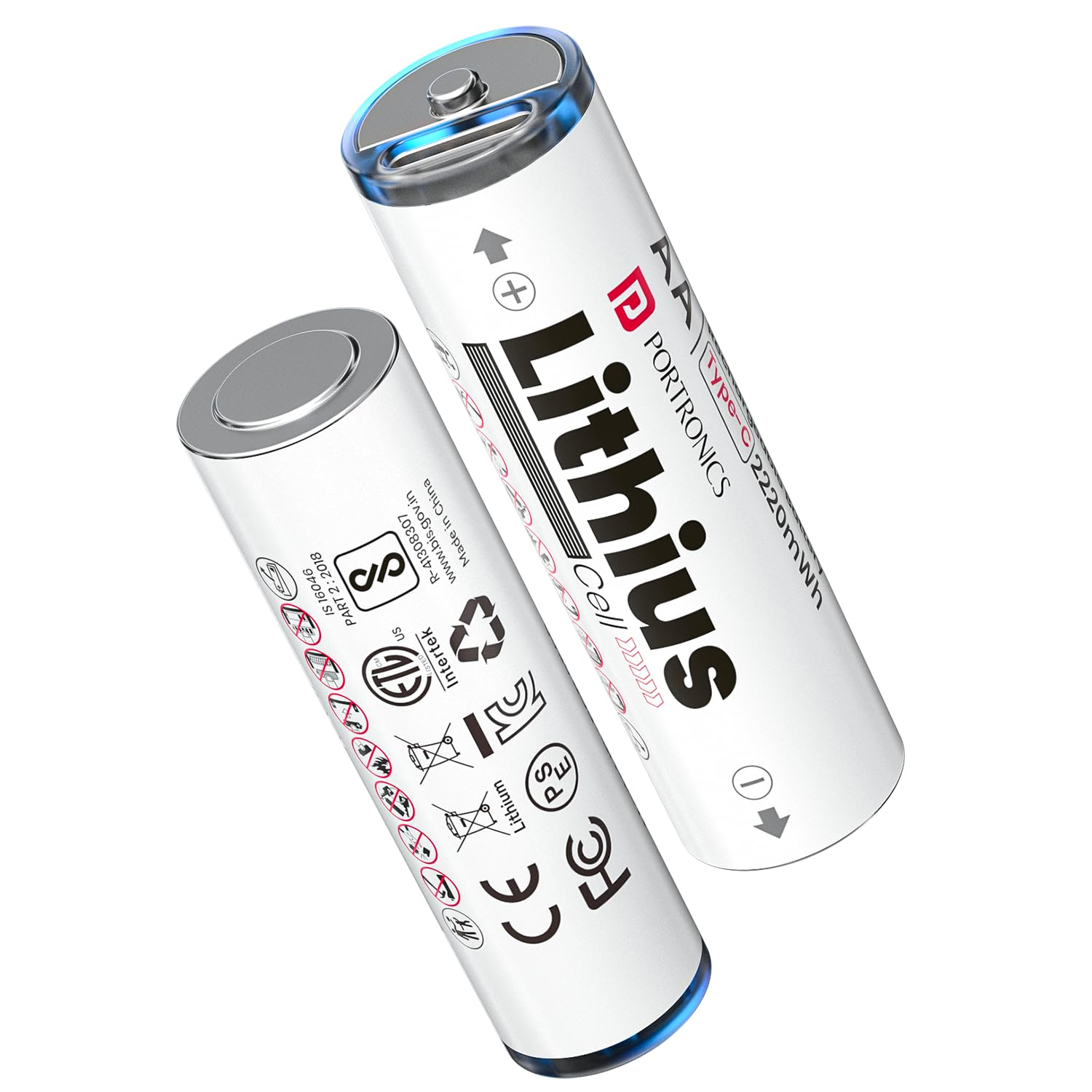
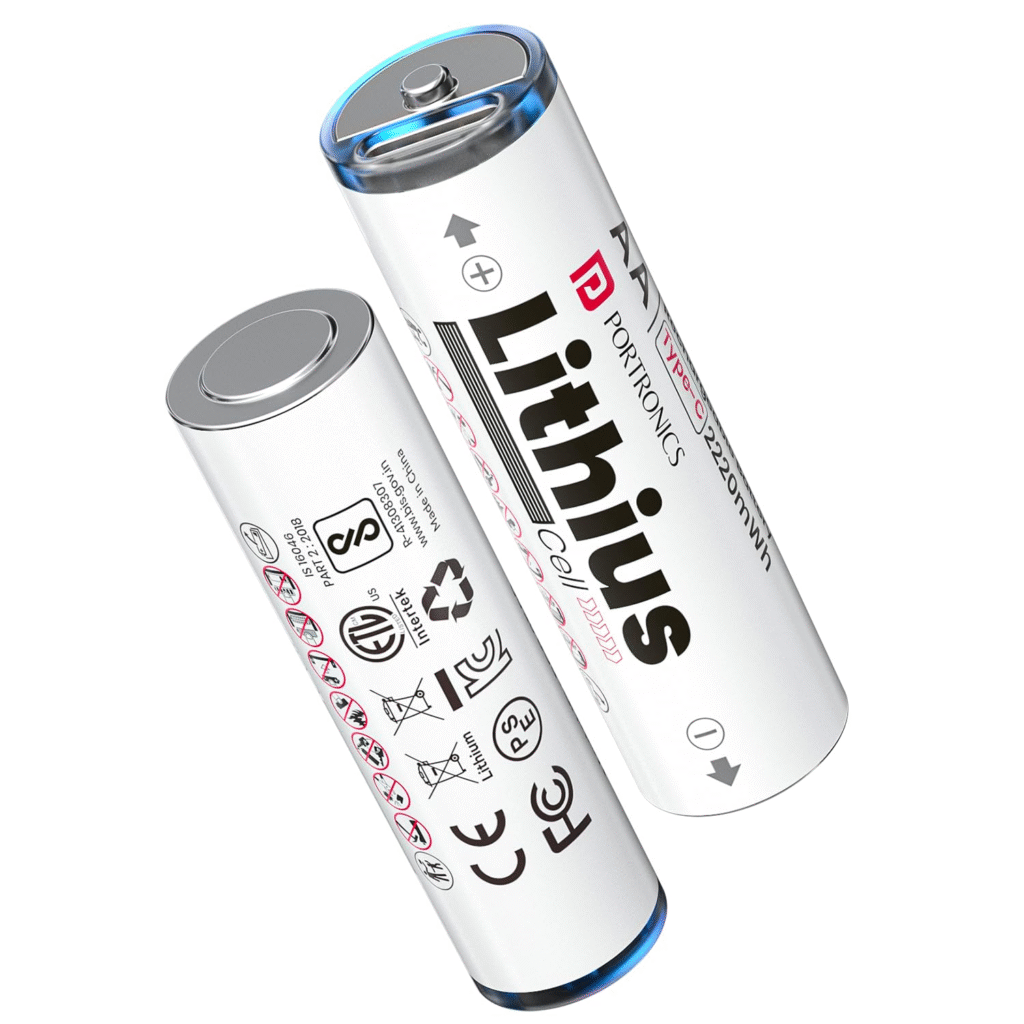
At first glance, they look like normal batteries. But look closer at the positive end (the “button” top), and you’ll see a tiny USB-C port.
Inside the casing is a dense Lithium-Ion cell (similar to what’s in your phone) and a tiny circuit board. Because Lithium-Ion naturally runs at a higher voltage (~3.7V), the built-in circuit “steps down” the voltage to a perfect, steady 1.5 Volts—matching standard alkaline batteries exactly.
When they die, you don’t hunt for a wall charger. You just plug them into the same cable you use for your phone or laptop.
The 4 Big Advantages
1. The “Constant Voltage” Boost
Standard batteries slowly get weaker as they drain. A fresh alkaline starts at 1.5V but quickly drops to 1.2V, then 1.0V. This is why your flashlight gets dimmer and dimmer long before the battery actually dies.USB-C batteries are different. They output a rock-steady 1.5V from 100% charge right down to 1%.
- Result: Your flashlight stays at max brightness, and your VR controller or Xbox controller maintains strong vibration and connection until the very last second.
2. Ultimate Convenience (Goodbye, Wall Docks)
Old rechargeables (NiMH) required you to keep a separate “charging brick” plugged into a wall outlet. If you lost the brick, the batteries were useless. USB-C batteries usually come with a “squid” cable (one USB-A to four USB-C ends), allowing you to charge 4 batteries at once using any laptop, power bank, or phone adapter. They are a traveler’s dream.
3. Lightning Fast Charging
Old rechargeables often took 4–8 hours to charge. Most USB-C Lithium batteries charge fully in 1.5 to 2 hours. You can top them up during a lunch break and be ready to go again.
4. No Leaks
We have all had an expensive electronic toy or remote ruined by a leaking alkaline battery. Lithium-ion cells are sealed differently and generally do not leak corrosive acid inside your devices.
The “Gotchas” (Cons to Consider)
It’s not all perfect. There are two specific drawbacks you need to know before buying:
- The “0 to 100” Battery Indicator Issue: Because these batteries maintain a perfect 1.5V output until they die, your device often cannot tell how much power is left. A battery indicator on a smoke detector or game controller might read “100% Full” for weeks, and then suddenly drop to 0% and shut off instantly. Tip: Don’t use these in safety-critical devices like smoke alarms.
- Slightly Lower Capacity: Because the manufacturer has to fit a USB port and a circuit board inside the battery shell, there is slightly less physical room for the chemical energy storage. While they are more powerful (voltage-wise), they may not last quite as many hours as a premium single-use Lithium battery.
Best vs. Worst Use Cases
To get the most value for your money, use them in the right devices.
| ✅ Perfect For (High Drain) | ❌ Skip For (Low Drain) |
| VR Controllers (Quest 2/3): The tracking improves significantly with steady 1.5V. | TV Remotes: They use so little power, a cheap alkaline is fine for 2 years. |
| Flashlights/Headlamps: Keeps the beam bright until the end. | Smoke Detectors: You need the low-battery “chirp” warning, which these may not give. |
| Wireless Mice/Keyboards: Fast recharging means zero downtime. | Sensitive Audio Gear: The internal circuit can sometimes cause faint “buzzing” in high-end microphones/radios. |
| Kids’ Toys (RC Cars): Motors run faster and more consistently. |
The Verdict: Are They Worth It?
Yes. While the upfront cost is higher (typically $20-$30 for a pack of 4), the math works out in your favor quickly.
One USB-C rechargeable battery is rated for roughly 1,000 charge cycles. Even if you only get half that life, that is 500 single-use batteries you didn’t buy and didn’t throw into a landfill.
Recommendation: Buy one 4-pack of AA and one 4-pack of AAA to start. Swap them into your high-usage devices (gaming controllers, toys, mouse), and keep your cheap alkaline batteries for the TV remote.